


Irish Pubs Weigh Rules for Smart-Glasses Recording

Key Questions for Individual Visitors Contacting Venue Organisers Ahead of Munich Pub Quizzes


How do you get the most out of a pub quiz night? Check the arrangements before going, give everyone a voice and treat the questions as a reason to talk rather than a test you must pass.
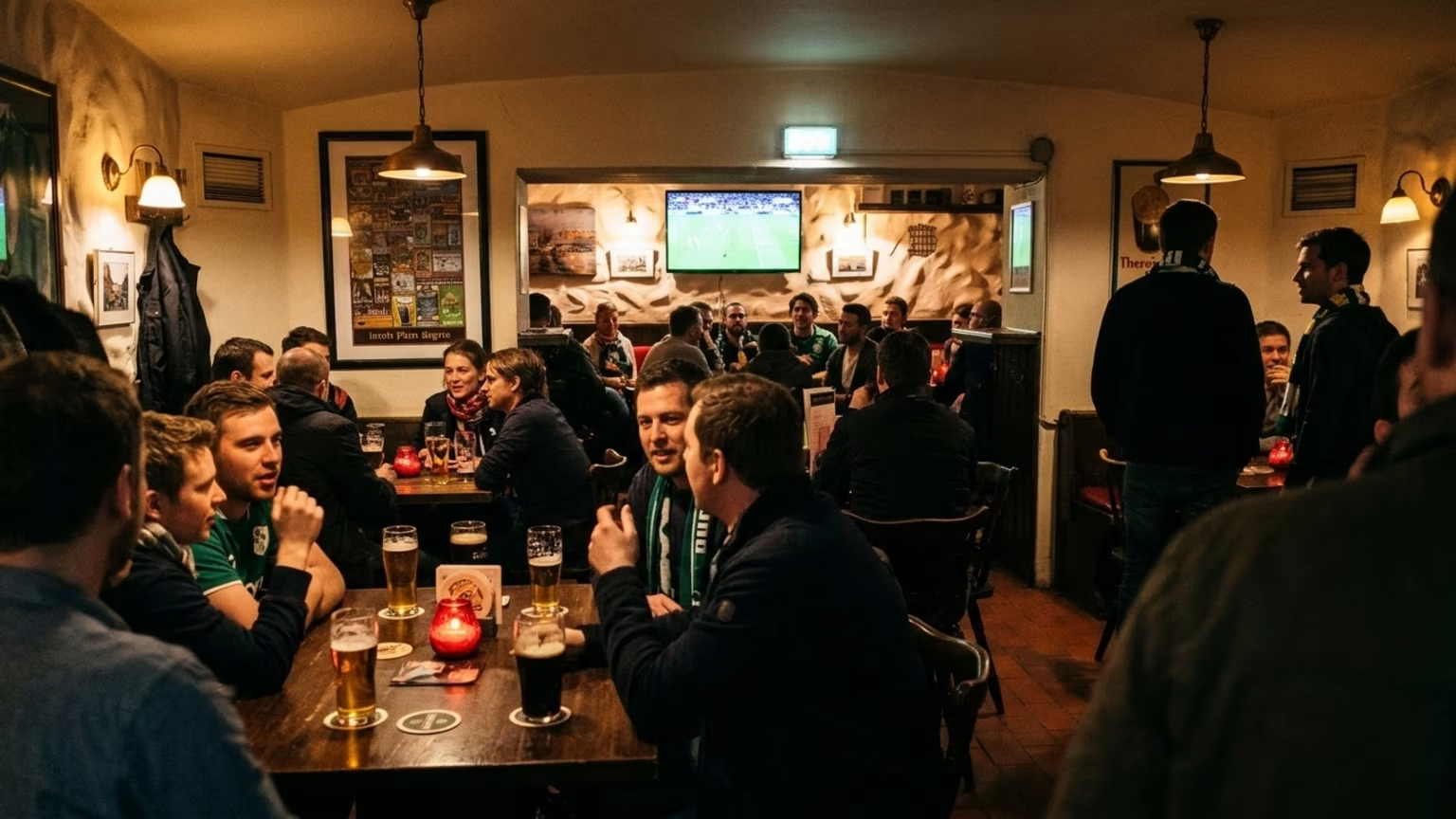
At Shamrock in Schwabing, we run our Thursday Pub Quiz in English and German. Every question is asked in both languages. That gives mixed-language teams a shared starting point without expecting one half of the table to translate for the other.
Our Pub Quiz takes place on Thursdays. For the particular Thursday you want to attend, check our quiz event information before making plans with your group.
Start with a date that works for the people you want to bring. Friends, colleagues and fellow students do not need matching interests to enjoy answering questions together. As an editorial suggestion, invite people whose company you like rather than trying to assemble a walking encyclopedia.
Keep the invitation simple: a pub night with questions to answer together. Nobody needs to promise a winning performance before agreeing to leave the house. There is enough pressure in the week already.
Check the start time for your chosen date directly with the venue rather than carrying an old listing into a new week.
For historical context, Wullup listed a Shamrock pub quiz for 8 October 2026 at 19:00 and showed another date on 15 October. Wullup warns that its details are not guaranteed and that it is not the organiser. Those past listings do not establish the arrangements for your visit.
Put the practical questions into one enquiry: the current start time, any booking or team registration, fees and the team-size limit. Ask about solo participation or late entry if either applies to your plans. This keeps the necessary checks together instead of leaving the awkward questions until you reach the door.
When organising friends, distinguish between the quiz start and the time your group plans to meet. They are different things. Agreeing on that beforehand is a sensible way to avoid a group chat full of people claiming they are nearly there.
Ask the venue whether solo visitors can join an existing team before assuming there will be a place available.
Arriving alone and being assigned teammates are not the same arrangement. A useful enquiry is: “I'm coming on my own. Is there a way to take part with a team?” It explains what you need without treating another table's spare chair as an invitation.
If joining a team is possible, introduce yourself before offering your answer to everything. Ask what the others think and contribute when you have something useful. You do not need to establish your specialist subject in the opening conversation.
For people bringing a group, a mix of interests is a reasonable approach. Invite the friend who loves music as readily as the colleague who remembers odd bits of history. This is a suggestion for varied conversation, not a claim about the categories you will face or a formula for winning.
The social aim is straightforward: make room for each person to contribute. Being the quietest person at the table should not mean being treated as the furniture.
We ask every question in both languages so English-speaking and German-speaking players can take part together.
For us, the point is a shared quiz rather than separate experiences at the same table. Locals, expats and visitors can hear the question in either language before discussing an answer. A teammate should not have to spend the evening acting as everyone else's unpaid translator.
Our advice is to let both versions of a question finish before rushing into a debate. Then check that everyone has understood what is being asked. That is an approach to inclusive teamwork, not an additional quiz rule.
If your group mixes languages, agree on a comfortable way to discuss answers. Leave space for someone who needs a moment to put their thought into words. Our guide to playing with English-speaking and German-speaking teammates focuses on that shared experience.
Listen to the host's explanation and separate the event's rules from your team's preferred way of discussing questions.
The suggestions here are ways to approach the evening, not extra house rules. Team size and registration are matters to confirm with the venue. Your team's conversation is something you can make more welcoming yourselves.
A simple approach is to hear the possible answers before defending one. Ask why someone thinks their answer fits. Give a quieter teammate the same attention as the person delivering a guess with the confidence of a television expert.
If you disagree, debate the answer rather than the person suggesting it. “What makes you think that?” is more useful than “You always get these wrong.” You are choosing an answer together, not conducting a performance review.
There is no need to turn every disagreement into a courtroom scene. Once the team has made its choice, move on. Saving all your energy for proving a friend wrong rather misses the point of inviting them out.
Ask the host whether you can still take part instead of assuming late entry or missed questions can be accommodated.
If your friends are already playing, keep your arrival brief while they are listening. There will be time for the full explanation of your journey later. A missed train does not need its own spoken-word set beside an active quiz.
When the host gives you an answer about joining, work with that answer. Do not ask teammates to reconstruct everything you missed while they are trying to follow what comes next.
If taking part is no longer possible that evening, decide whether you still want the social night with your friends. Missing the quiz does not have to turn the whole outing into a grievance. For a future visit, settle the meeting arrangements with your group beforehand.
Because getting questions right can be part of the pleasure without being the only reason you came.
Bar-trivia operator Buzztime argues that general-knowledge trivia can prompt discussion and make wrong answers part of the entertainment. That is an operator's perspective rather than independent proof that every team will have the same experience.
Our editorial advice is to keep the conversation generous when your team struggles. Ask someone else what they think instead of letting one frustrated player take over. Laugh at an answer if the person who offered it is laughing too. Do not make a teammate the evening's running joke.
You can also stop treating uncertainty as something embarrassing. “I'm not sure, but here's my reasoning” leaves room for a useful discussion. A loud guess is still a guess. Volume has not earned it a qualification.
When an answer goes wrong, let it go. The next question deserves more attention than a lengthy argument about who nearly picked the correct one.
The most useful advice is to sort out access before the evening and make space for people once you are there. Confirm the practical arrangements, listen to the host and give your teammates a fair hearing.
A successful social night need not depend on finishing near the top. For us, participation matters more than proving who knows the most. If everyone has had a chance to contribute, you have given the evening something worth coming out for beyond the answers.
Two ways to join a pub night, answering questions and singing, put participation at the centre of a Munich visit. For students seeking recurring karaoke, Shamrock runs Student Karaoke on Tuesdays and late-night sessions at weekends, keeping the focus on joining in rather than serious performance.

