
Key Questions for Individual Visitors Contacting Venue Organisers Ahead of Munich Pub Quizzes
Real Ink and Proper Pints Prove Pubs Do Not Need AI


On October 27, 2026, The Irish Times reported that Wetherspoons had banned smart-glasses recording in its Irish premises to protect customer and staff privacy. Customers are asked to switch off recording when they enter.
A pub is a shared social space, so the privacy question reaches beyond the person wearing the device. For us, the useful question is whether people nearby know they are being recorded and whether recording fits the venue's expectations.
The Irish Times found that several independent pub owners it interviewed had not adopted formal policies. Some expected that they might need to address the issue as the devices became more common. That is a debate taking shape, not evidence that Irish pubs have all agreed on a ban.
Ronan Lynch, who runs Dublin's Swan Bar, told the paper he had not encountered anyone wearing the glasses at his venue. He expected that the bar might have to address the issue in future. His account is worth keeping in proportion: anticipation is not the same as a reported incident.
The European Data Protection Board adopted a preliminary statement on October 13, 2026. It identifies transparency as a central challenge because bystanders may not know their personal data is being processed or who is processing it. They may also not know why.
The EDPB says recording warnings should be obvious, reliable and hard to ignore. Its examples include bright LEDs and audio cues. It also mentions voice-activation cues, privacy-friendly phone notifications and distinctive designs.
The Irish Times reports that Meta's later glasses model added a larger recording LED and a blinking pattern. However, University College Dublin law professor TJ McIntyre told the paper that the indicator could be disabled. He argued that relying on it does not adequately address bystanders' privacy concerns.
RTÉ reported Meta's position that attempts to cover or tamper with the warning stop the camera. The broadcaster also noted accounts of people successfully tampering with the indicator. That leaves a disputed safeguard, not a settled guarantee that everyone nearby will be alerted.
Our view is simple: a technical signal should not replace a conversation about filming people. A light might be part of that conversation. It should not have to do all the talking.
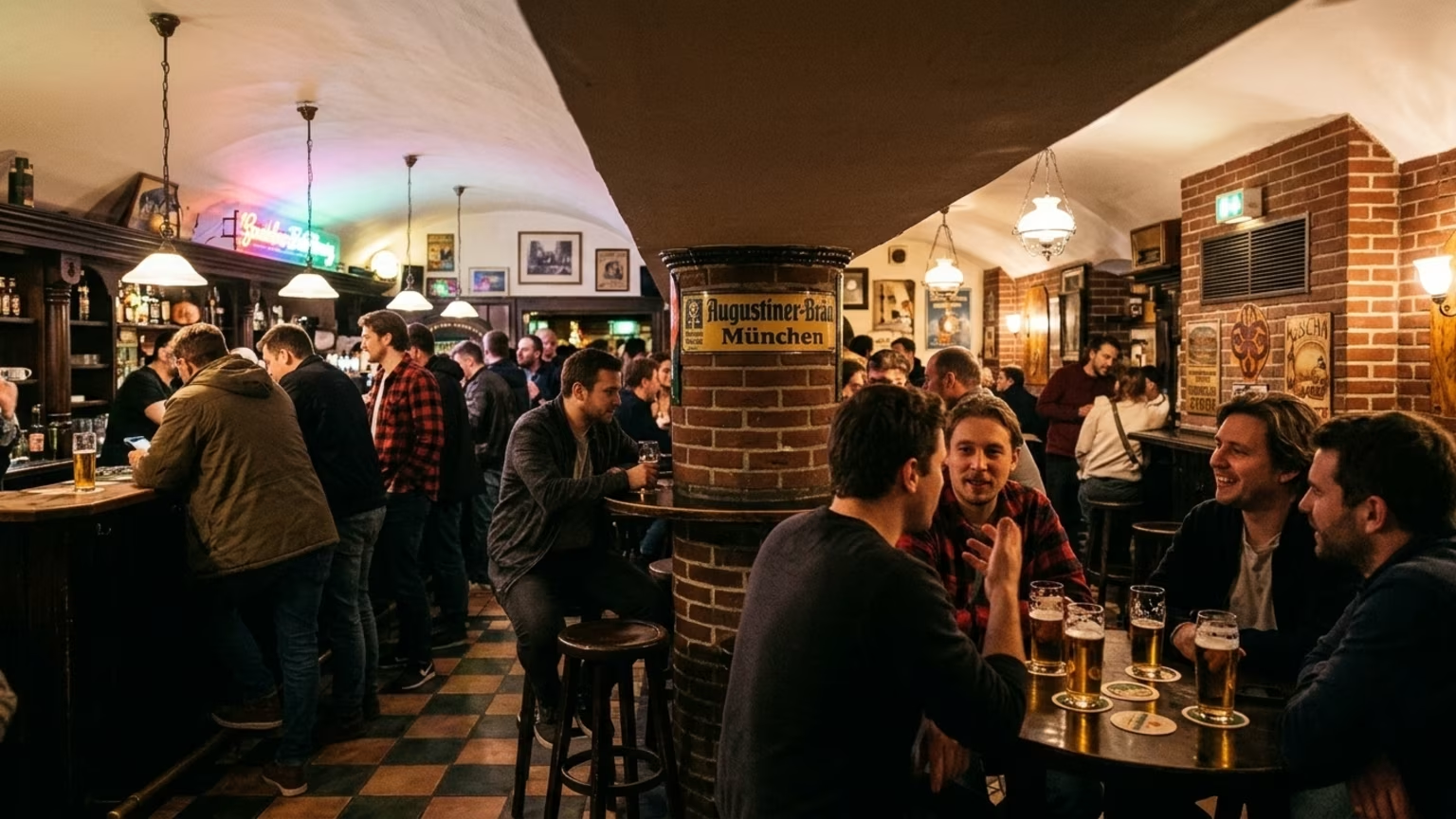
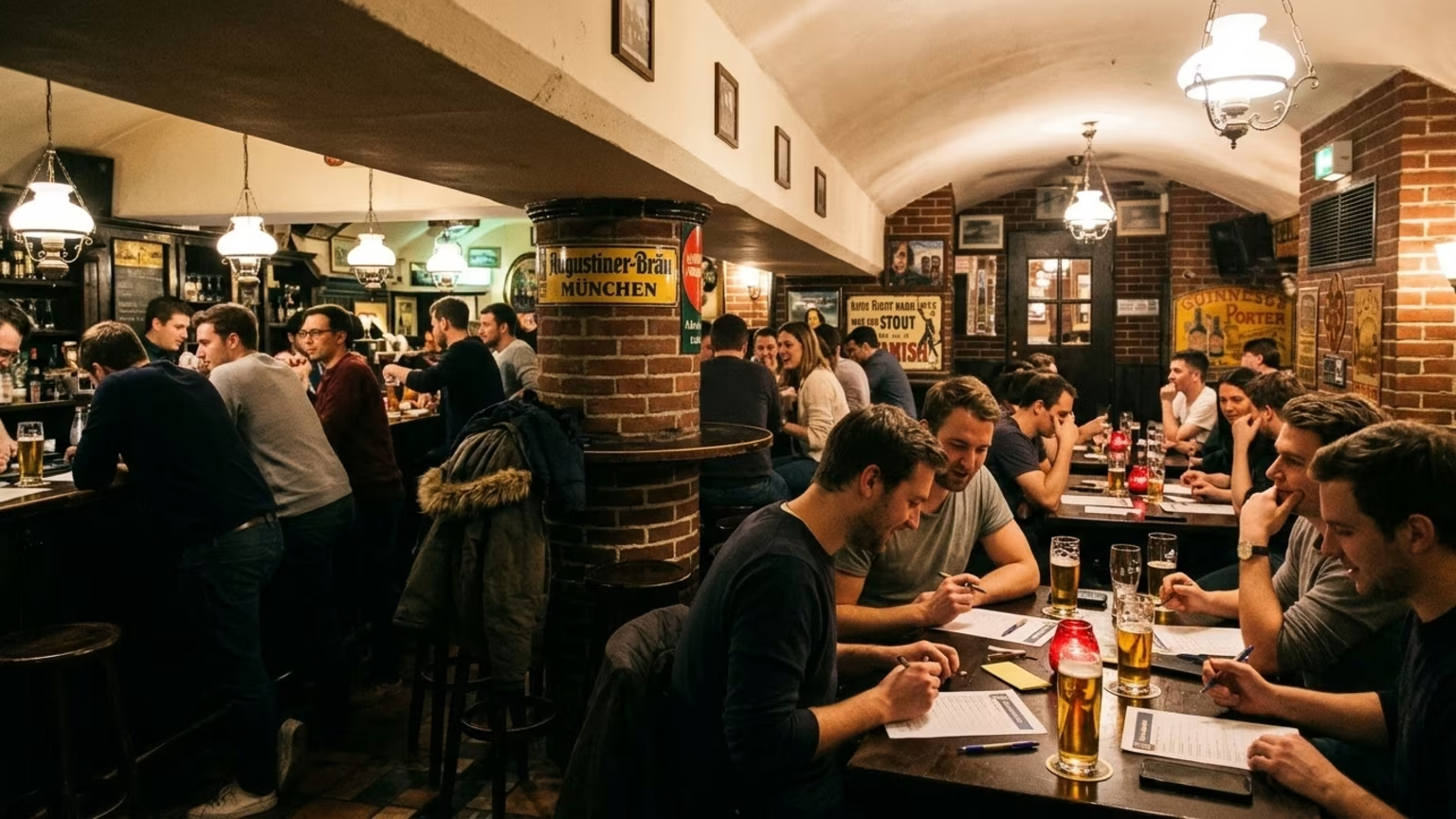
We have been part of Schwabing nightlife since 1989. Our idea of a pub still centres on pints and conversation. Karaoke, quiz nights, comedy and sport give people something to join. There is more about that mix in the story behind our pub.
At Shamrock, we see match nights as social nights rather than screen time. Sitting near the bar makes it easy to react with the room or ask about the game. In our experience, that can lead to a conversation with someone you did not arrive with.
Sport is part of the pub rather than an occasional extra. Our Watch Sports coverage has included Six Nations rugby and Premier League football. For us, the point is the shared reaction as much as the action on screen.
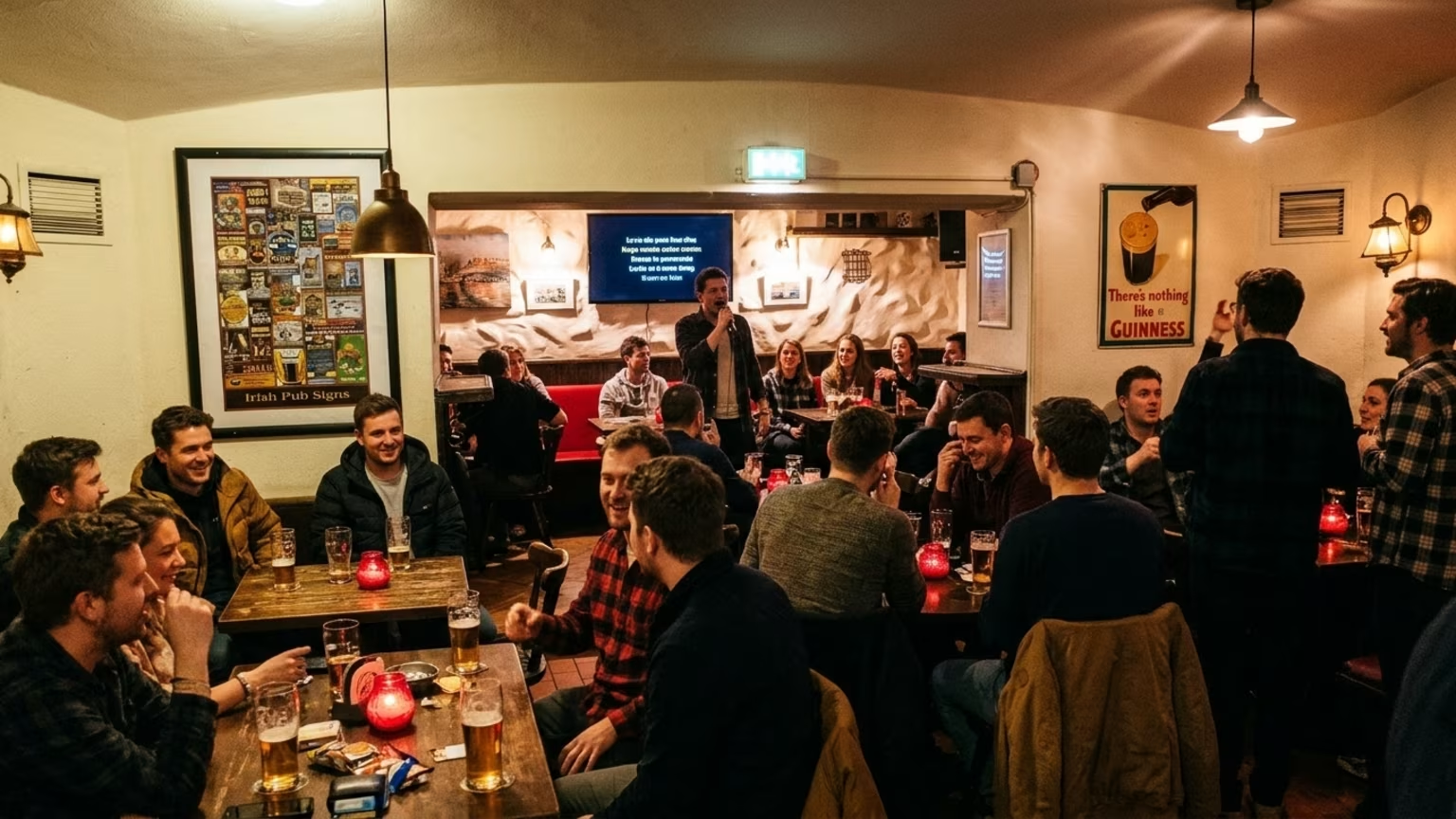
Karaoke makes the privacy question personal in another way. Our late-night sessions are built around participation and a supportive crowd. We believe having a go should matter more than whether somebody can turn the performance into a clip.
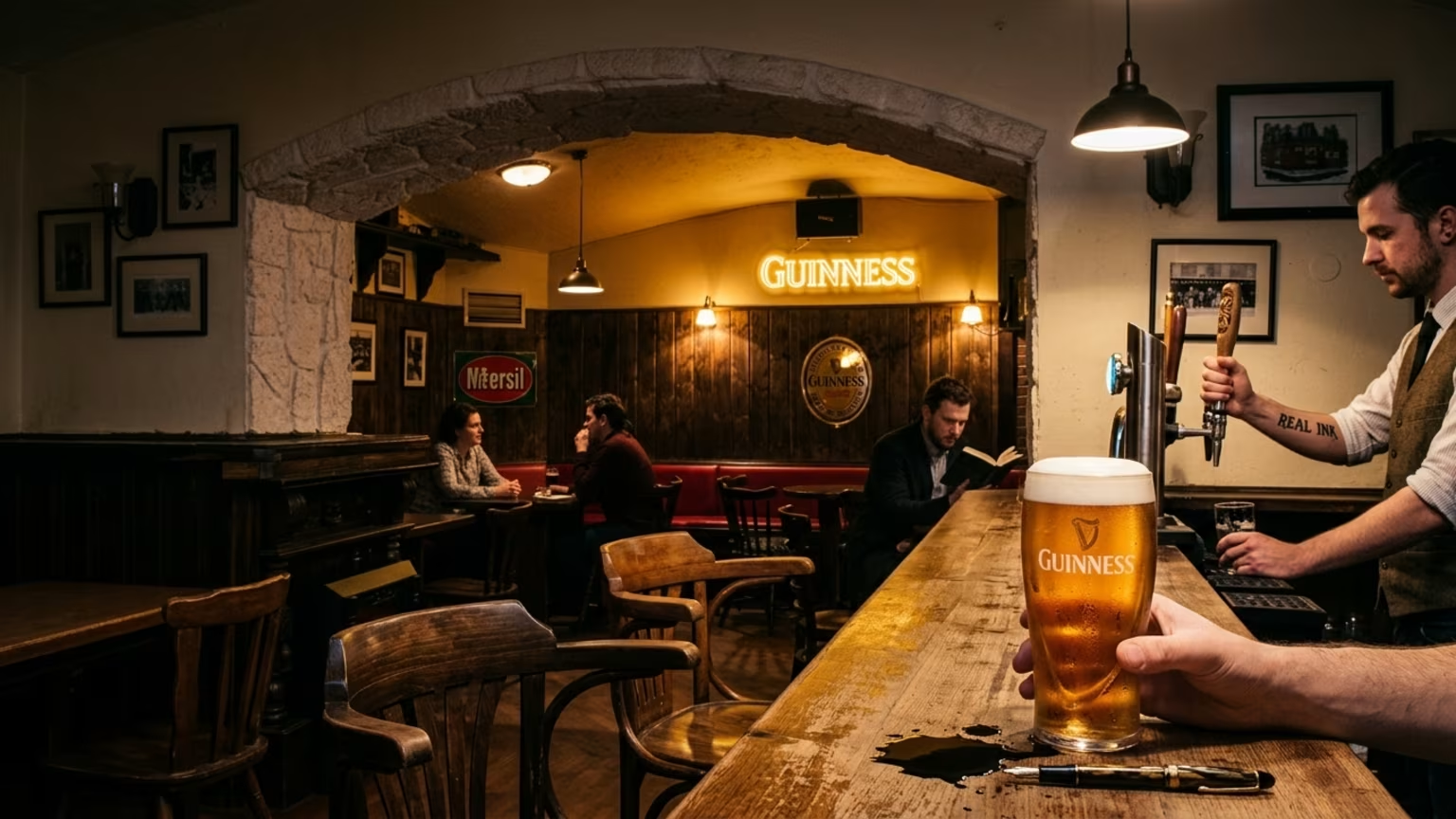
We pour Guinness in two parts using a clean tulip glass and a full-open tap. A tilted first pour is followed by a settling stage and a final top-up. We do not rush the settle when the room is busy. That is our sort of pub ritual: something worth enjoying without needing to record it.
These dates track the reporting and guidance behind the debate:
These are publication and statement dates rather than a public-event schedule. None announces a pub-event start time, sporting matchup or performer slot. For a planned karaoke session or match night, the venue's own event announcement remains the place to check the actual programme.
The distinction in the Wetherspoons report matters at the door. According to The Irish Times, customers are asked to switch off the recording function. The reported restriction is not a blanket ban on entering while wearing smart glasses.
The EDPB statement is guidance about data-protection challenges, not a new universal ban on recording in pubs. Nor does an Irish chain's policy automatically become a rule for a Munich venue.
The reporting does not establish Munich entry requirements or a Shamrock smart-glasses policy. It also announces no recording-related cover charge or reservation condition. For a Munich night out, check those details with the venue for the event you plan to attend.
Useful questions before a visit include:
Those are questions to ask, not rules to assume. For a planned Shamrock visit, put the questions to the pub directly so the discussion concerns the evening you actually have in mind.
Treat booking and recording as separate questions. A reserved table does not answer whether the people around it are happy to appear in a clip. Our view is that asking first is better pub etiquette than treating a small light as the whole conversation.
The courtesy should not depend on whether a camera sits in glasses or in someone's hand. Ask before recording people nearby and respect the venue's answer. Someone joining a chorus or celebrating a try is taking part in a pub night, not automatically volunteering for someone else's video.
There is no need to turn that into a grand argument over every device. Keep the question practical: what recording is welcome here, and who might end up in it? That is a more useful starting point than assuming either that all glasses are banned or that every recording is welcome.
The useful follow-ups are formal announcements from individual venues and any further EDPB guidance. Watch for wording that distinguishes recording from simply wearing a device. It should also make clear what guests are expected to do rather than leaving them to guess.
For Munich readers, future karaoke and sports listings still need their own dates and entry details. A privacy headline is not a replacement for those announcements. The next useful update would connect a clear recording policy with clear information about the night itself.
Until then, our view is straightforward: ask before making other people part of your footage. The chorus, the match and the conversation are already reasons to be there. They do not need an upload to count.
Choosing participation over footage brings the evening back to the mic, where Shamrock's regular late-night karaoke pairs singing with a supportive crowd. For people seeking an Irish pub in Munich centred on drinks and company rather than dining, the format makes joining in part of a relaxed social night.

