
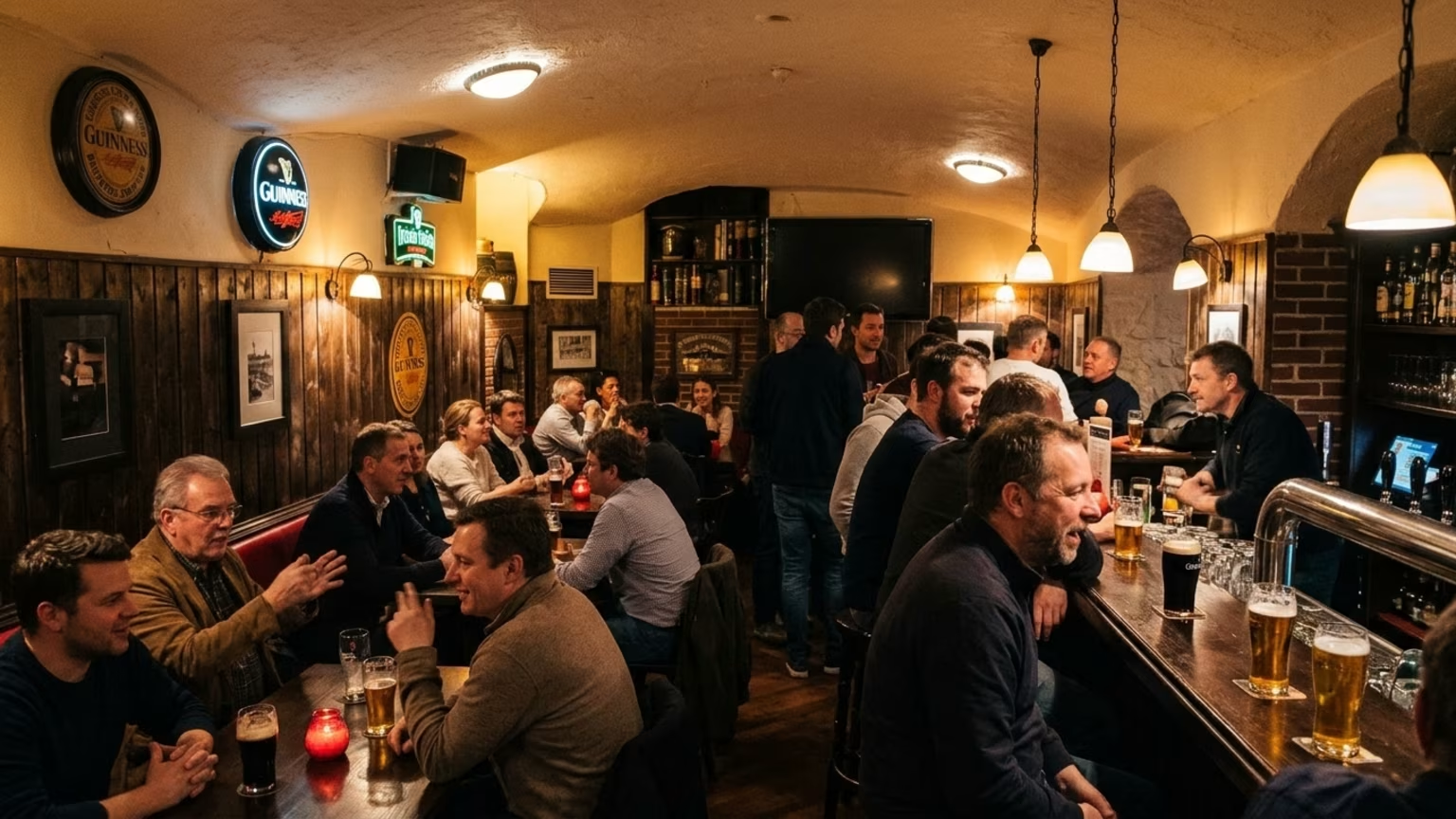

Wednesday Pub Comedy at Shamrock: Practical Timing, Free Entry and Voluntary Donations
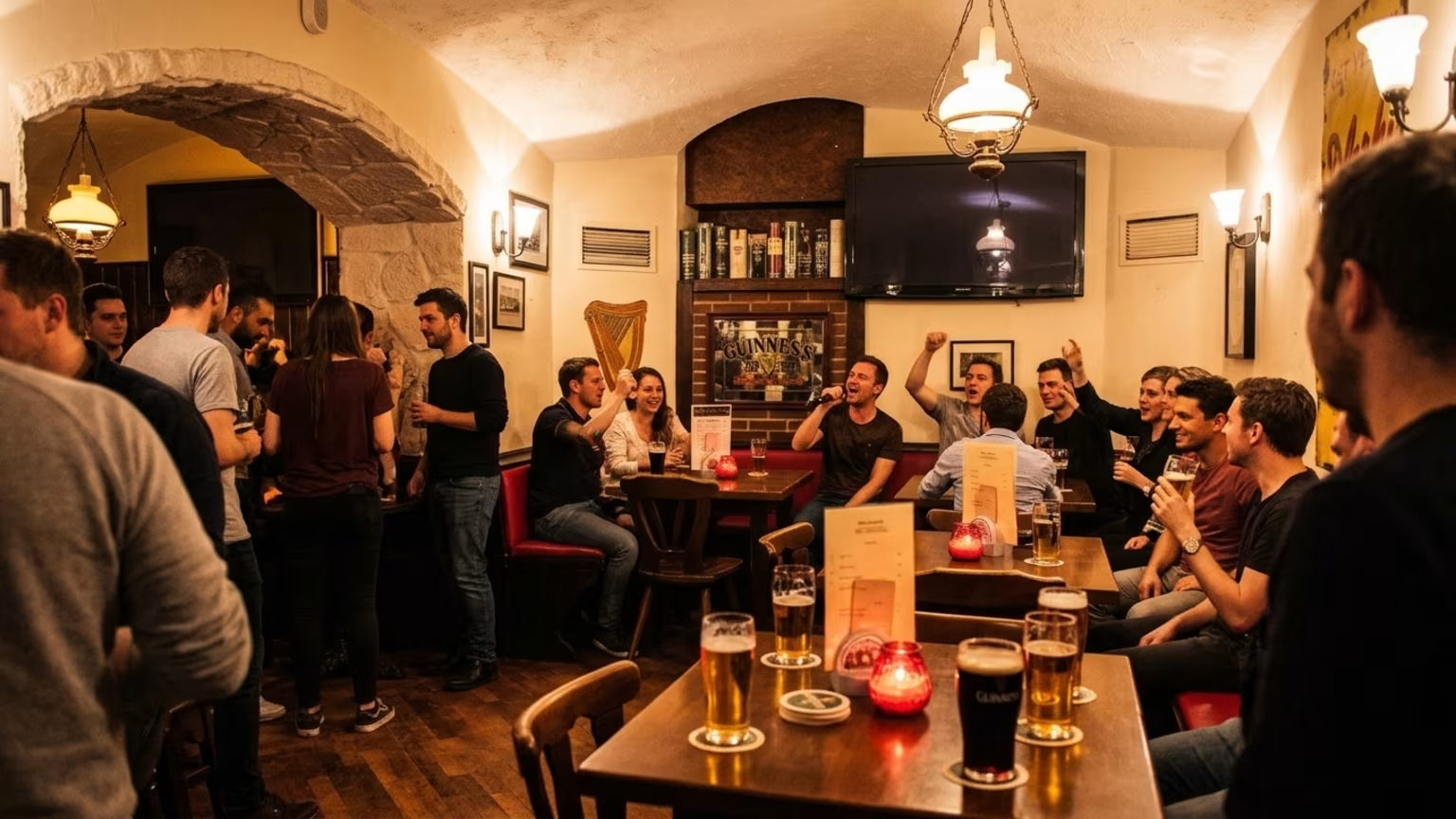
Your First Karaoke Night in Munich: How to Join In


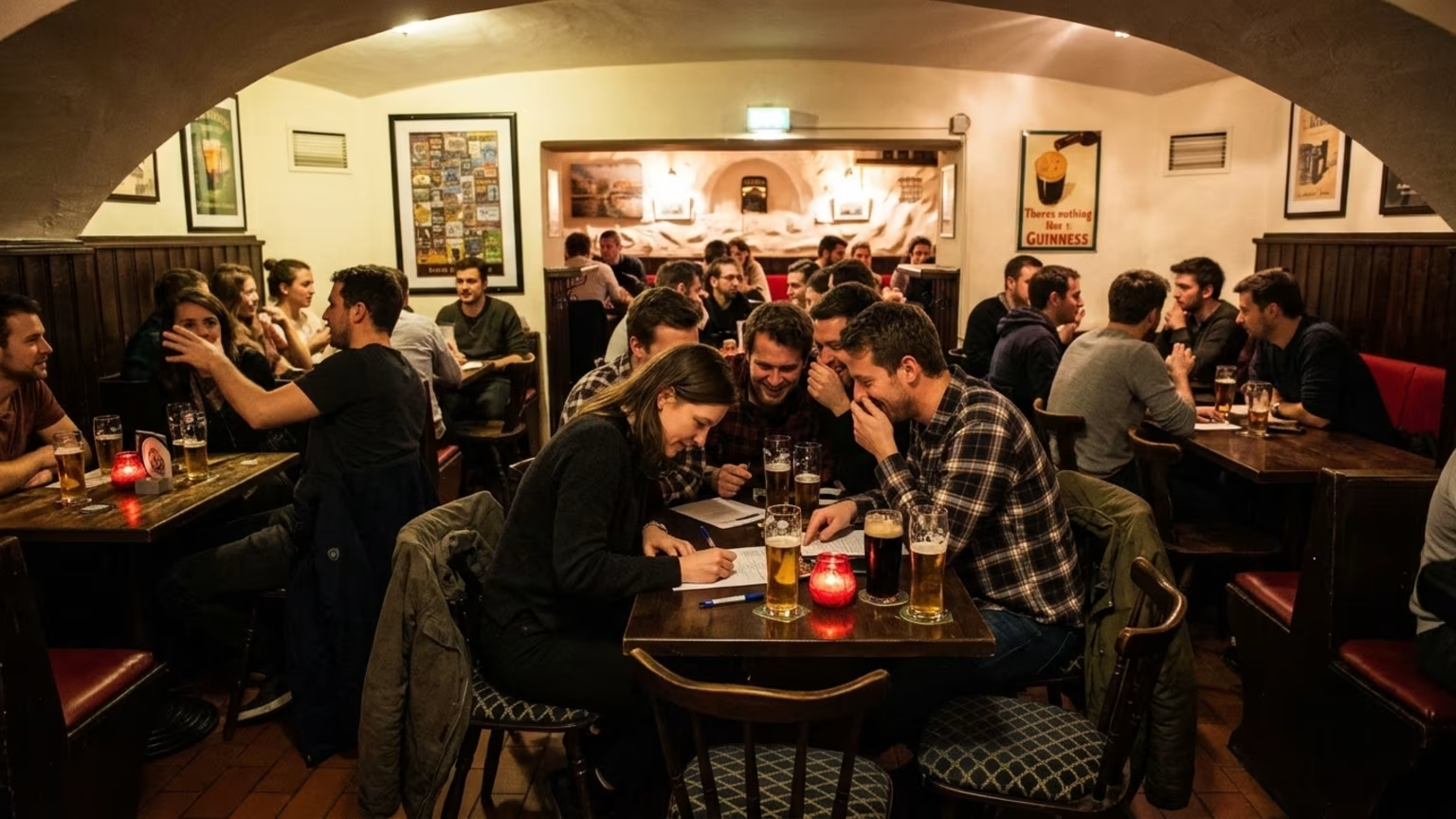
How do I find my place at a Munich pub quiz? Pick a night that fits your language and plans, then find out how joining a team works before you go.
At Shamrock, our Thursday quiz puts English and German questions in the same evening. The aim is a pub night where mixed-language teams can join in together. Start with that fit, then sort out the practical bits before anyone appoints themselves captain.
Our pub quiz runs on Thursdays.
A local Munich quiz guide updated on November 2, 2026 lists ten quiz nights across several districts. Its listings run from Monday through Thursday and show different formats and participation arrangements. That is a useful reminder to choose a specific event rather than assume “pub quiz” means the same night everywhere.
Start times, fees, team limits and entry arrangements can change. Check the current details for your chosen date, including whether a group needs to book. Put those basics in the group chat so nobody is working from last month's plan.
For a group, it helps to put the date and venue in one clear message. Keep the start time separate from the time you want to meet. That avoids a planning muddle without pretending there is one perfect arrival time for every quiz.
Shamrock is at Trautenwolfstraße 6 in Munich's Schwabing district. We have been part of the local pub scene since 1989, with drinks and participation at the centre of the night.
Our crowd is a mix of students, expats, Munich locals and visitors. We are Irish, German and international, so the room is not built around one type of guest.
For a quiz plan, location is worth discussing alongside language. Our advice is to choose somewhere the whole team actually wants to spend the evening. A brilliant answer sheet is not much of a social plan on its own.
No, but the route into a team depends on the event. The local guide describes different arrangements for people arriving alone, so treat joining a group as something to arrange rather than an automatic part of entry.
Our suggestion is to make the question simple: “I'm coming on my own. Is there a way to join a team?” That asks about participation rather than just whether the doors are open.
If you are approaching a group, ask whether they would welcome another player. Leave room for a polite no. Choosing company is part of their evening too.
With friends, ask who wants to commit to the quiz itself and who mainly wants a drink. Our view is that both are fair choices, but knowing the difference makes the plan clearer. Pick the evening around what your group actually wants to do.
Our guide to making a solo quiz plan has more on contacting organisers before you go.
Every question in our Thursday pub quiz is asked in both English and German. Mixed-language teams can work on the same question without making one teammate responsible for translating it for everyone else.
That changes what to look for in a team. Our advice is to value people who listen and enjoy discussing an answer, not just the loudest person with a suspiciously confident memory.
Give each other a chance to speak before choosing an answer. Someone can contribute a useful thought without wanting to lead every discussion. These are suggestions for a good evening, not extra house rules.
You do not have to turn the table into a language lesson. A useful aim is for everyone to have room to offer an answer in the language they are comfortable using. Keep the discussion welcoming rather than marking each other's vocabulary.
Read more about playing across two languages if your group mixes English and German. The language format should help the table share the activity, not decide who gets to participate.
Team limits and competition rules belong to the particular quiz, not to Munich as a whole. The local guide lists the Substanzielles Pub-Quiz for teams of two to four and Rennbahn for two to five. Use the limit for the event you actually plan to attend.
Question formats differ too. The guide includes music, general-knowledge, estimation and interactive formats across Munich listings. Choose for what you enjoy rather than assuming every quiz will test the same sort of knowledge.
A published guide to quiz rules highlights phones, teams, ties and prizes. Those are useful topics to raise with an organiser before play. They are not a substitute for that event's own rules.
For keeping debate friendly, our view is simple: argue for the answer without making it an argument about the person. Explain why you think you are right. Let someone else finish before replying.
Before play, agree how your own table will make a final choice when opinions differ. The important point is that everyone understands the approach. Keep that agreement separate from whatever the organiser requires for submitting answers.
If your team cannot agree, choose a way to settle the answer without turning the table into a courtroom. Being wrong together is allowed to be funny. You are choosing a night out, not conducting a disciplinary hearing.
Ask the organiser about late entry, or request clarification of the question when there is a suitable moment. The useful habit is to clarify the situation rather than invent a rule about catching up.
If you are late, explain that you want to take part and ask how to join without interrupting play. Do not assume someone can simply add your answers after the fact. Let the organiser set the boundary.
If you could not hear the wording, ask for clarification when there is a suitable moment. There is a difference between checking the question and asking for help with the answer. Keep that distinction clear and keep the request short.
First decide whether your priority is the quiz or simply a social pub evening. If it is the quiz, ask about another suitable opportunity to take part rather than pressuring a full group.
If competition itself feels like hard work, another format may suit you better. We run late-night karaoke every Friday and Saturday, where guests choose songs and sing with a pub crowd behind them. There, cheering is as much part of the night as holding the microphone.
We also see match nights as social nights rather than just screen time. In our experience, sitting near the bar makes it easier to react with the room and start talking football or rugby. Neither singing nor sport needs to be your consolation prize; it can simply be the evening you prefer.
There is also nothing wrong with deciding a particular format is not for you. The aim is not to pass a test of being sociable. It is to find an evening you would choose again.
The best fit is the night whose language, joining arrangements and style work for your group. Settle those first, then keep the contest in proportion.
For us, a good quiz evening leaves room for different voices at the table. You can care about the answer without making the entire night depend on being right. The score matters less than whether you would enjoy another Thursday together.
A pub quiz can leave part of a mixed-language table out when the questions use only one language. Shamrock's recurring English and German quiz is designed for both groups to play together, offering locals and visitors a social evening in Schwabing built around the same activity rather than separate conversations.

